

Birmingham Airport has published a draft master plan proposing more than £2bn of investment over 15 years to increase annual passenger capacity to around 30m by 2041.
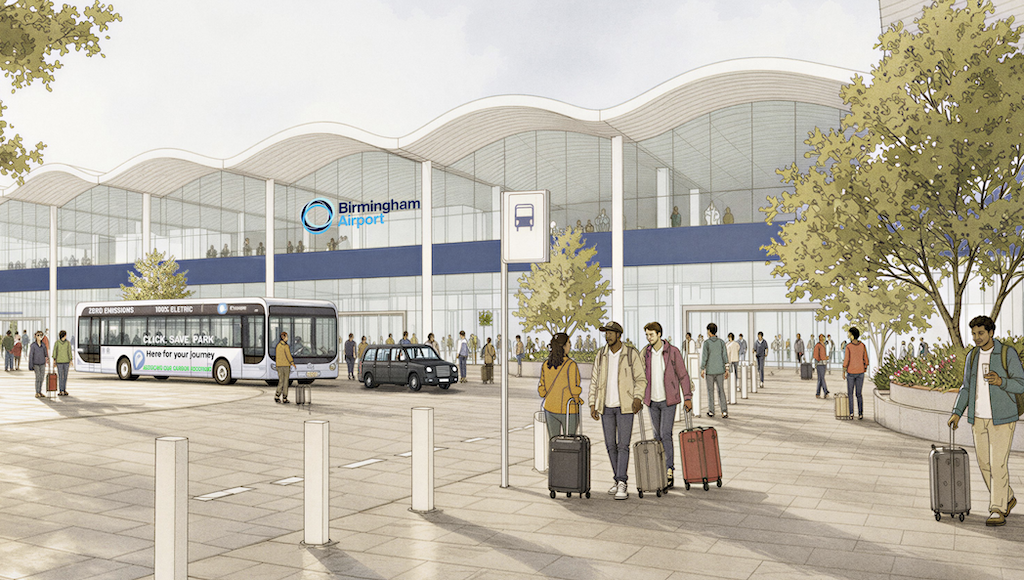
image: Birmingham Airport
The proposals focus on making greater use of the airport’s existing runway, expanding terminal facilities and improving surface access. The airport estimates the plan could generate an additional £3.6bn in gross value added for the West Midlands economy and support more than 50,000 jobs, including 3,800 at the airport.
The proposed investment includes improvements to baggage handling, additional aircraft stands, terminal facilities, taxiways and transport connections. The terminal could be expanded by around 60%, while the number of aircraft stands could increase from 42 to between 70 and 75.
The airport handled a record 13.65m passengers in 2025. Reaching 30m annually would more than double that level of traffic, requiring changes to airport infrastructure and passenger processing capacity. The plan also anticipates an increase in aircraft movements, although passenger growth is expected to be supported partly by airlines operating larger aircraft.
The first phase of development could begin in 2027, subject to further planning and investment decisions. Birmingham Airport said the programme would be delivered in stages, with the draft master plan setting out the long-term direction for development rather than granting approval for individual projects.
The proposals are also intended to improve access to the airport by public transport and road, while addressing the environmental and community impacts of growth. The airport’s updated sustainability strategy covers areas including carbon emissions, noise, air quality, biodiversity, water and sustainable transport.
The airport recently launched an eight-week public consultation, with feedback due by 4 December 2026. A final master plan is expected in early 2027, following consideration of responses from residents, businesses and other stakeholders.
Birmingham Airport chief executive Nick Barton said delivery would depend partly on a stable taxation and regulatory environment to support long-term investment. The airport has cited rising operating costs and a doubling of its business rates as concerns for future investment.
Transport Secretary Heidi Alexander said the proposals could support employment and economic growth in the West Midlands, while West Midlands mayor Richard Parker said the consultation would give communities and businesses an opportunity to influence the airport’s future development.
The draft master plan is available through the Birmingham Airport consultation website.