

Chinese aviation technology company Coolfly has drawn attention at the annual International Consumer Electronics Show (CES 2026) in Las Vegas, with the launch of what has been dubbed a flying scooter that the firm says could redefine personal flight for everyday users.
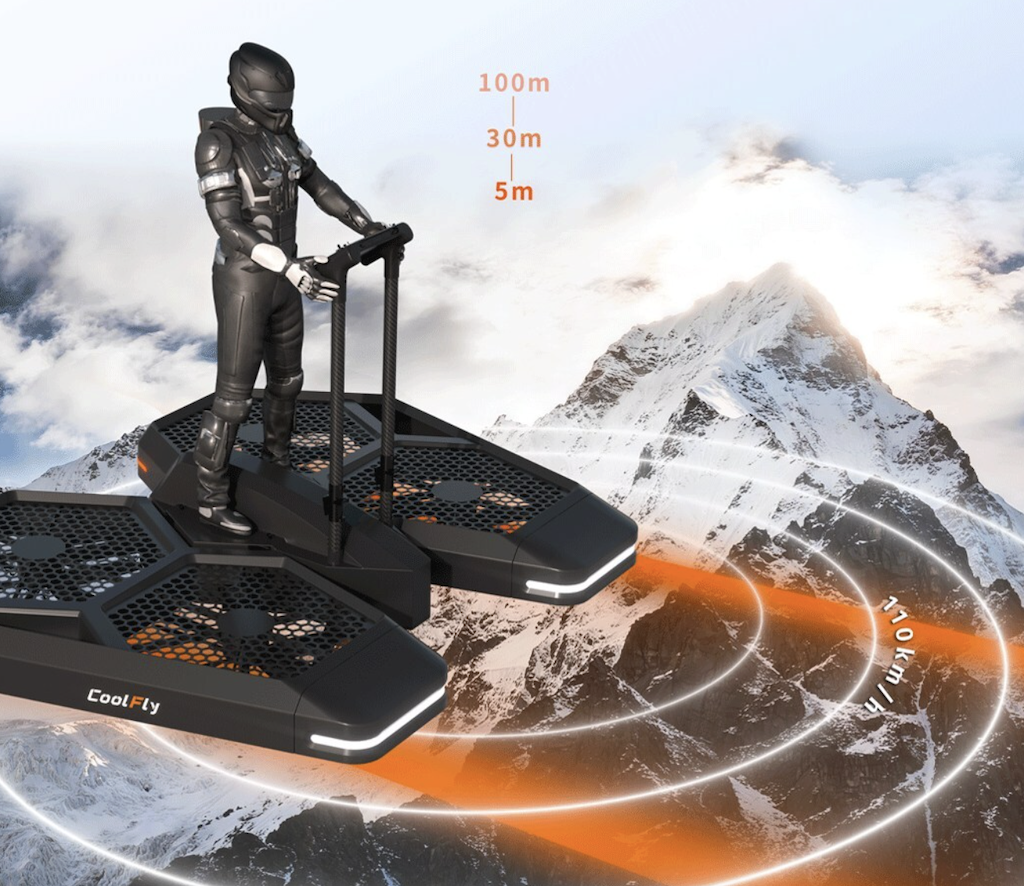
image: Coolfly
The standing version of Coolfly’s next generation eVTOL was showcased alongside a seated variant. The aircraft are designed for low-altitude flight (less than 30m) and feature advanced AI-assisted control systems that respond to the pilot’s posture for manoeuvring, as well as autonomous path-planning and obstacle-avoidance functions.
Coolfly said its ultralight aircraft weigh approximately 110 kg and can reach top speeds of around 100 km/h. The company positions them as zero-emission vehicles for a range of potential uses, including urban mobility and “aerial recreation”.
A key part of Coolfly’s strategy is regulatory alignment. The aircraft are engineered to meet US Federal Aviation Administration (FAA) Part 103 ultralight rules, which in the US allow certain ultralight aircraft to be flown without a traditional pilot’s licence so long as specific weight and operational criteria are met.
However, Part 103 ultralight rules also come with restrictions – such aircraft are typically limited in where they can operate (for example, not over congested areas) and how they’re used – and broader commercial or urban operations remain constrained under current standards.
Coolfly’s announcement coincides with ongoing work by the FAA to update and modernise aviation regulations for new types of aircraft. The FAA’s Modernisation of Special Airworthiness Certification (MOSAIC) rule, which has been finalised recently, is expected to reshape certification pathways for light sport and other small aircraft categories, potentially affecting how personal eVTOLs could be used and who can fly them.
Industry observers say that while licence-free ultralight flight under rules like Part 103 is already possible for certain aircraft types, broader adoption of personal eVTOLs, especially in urban settings may depend on how regulations evolve over the rest of the decade. Some FAA officials have indicated that certified eVTOL operations for passenger or commercial use could begin appearing in US airspace by the late 2020s, though specific timelines vary by aircraft category and regulatory developments.