

Newcastle Airport has opened a government-approved Border Control Post to enable regulated goods, including flowers, plants, fruit and vegetables, to be inspected and cleared on site, as the airport continues to expand its cargo handling capabilities.
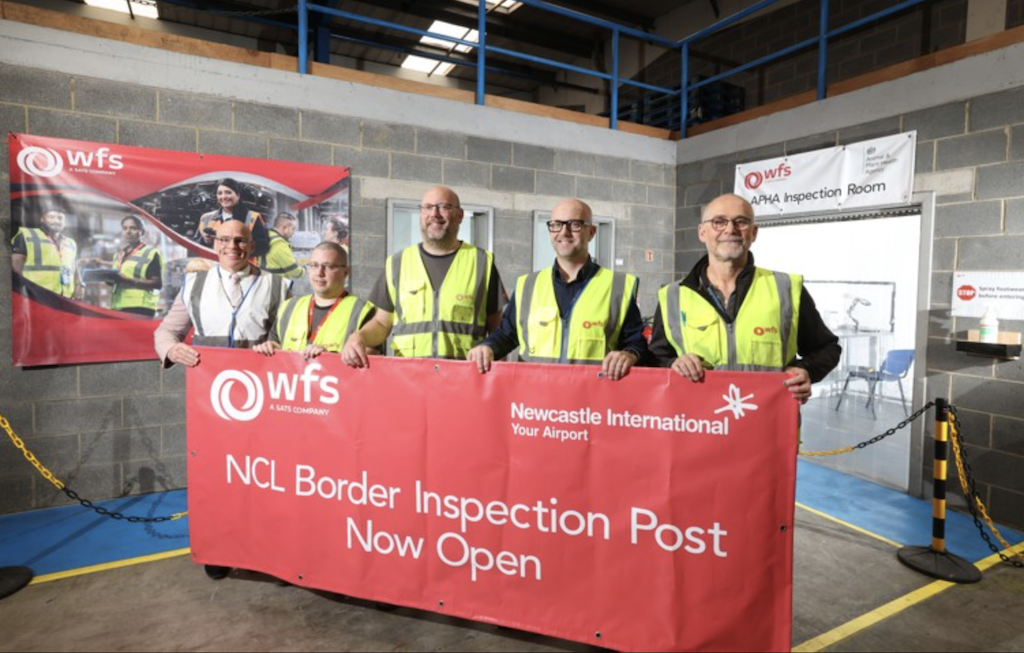
image: Newcastle International
The facility has been opened by Worldwide Flight Services (WFS) at its cargo hub in the airport's freight village. It provides an additional entry point into the UK for goods requiring border checks, potentially reducing transit times and logistics costs by allowing consignments to be inspected closer to their final destination.
The new facility is intended to broaden the range of products that can be imported directly through Newcastle, particularly time-sensitive goods such as fresh produce and flowers.
Newcastle Airport handles more than 5,000 tonnes of freight annually. The Border Control Post is part of a wider programme of investment intended to increase the airport's capacity to handle different types of cargo and attract additional freight business.
Earlier in 2026, executive jet centre and handling specialist Samson Aviation expanded its ground-handling equipment with a main deck loader and supporting equipment. This has increased its ability to accommodate a wider range of narrowbody and widebody passenger, charter and cargo aircraft, as well as specialist consignments such as heavy machinery and luxury vehicles.
The airport also offers round-the-clock operations, on-site refuelling and access to the region's strategic road network.
Leon McQuaid, Newcastle Airport's director of aviation development, said the new facility would strengthen the airport's position as a gateway for international trade and help businesses move goods more efficiently.
Worldwide Flight Services' investment adds to the airport's efforts to develop its cargo business beyond its established passenger operations, with further opportunities being sought from cargo operators and aviation-related businesses.