

Shark skin inspired surface coating reduces drag on in service Japanese long-haul plane
Japanese airline ZIPAIR has applied a riblet-shaped surface coating to a Boeing 787-8 aircraft in an effort to reduce aerodynamic drag and improve fuel efficiency, a development the airline says could contribute to lower carbon emissions from long-haul flights.
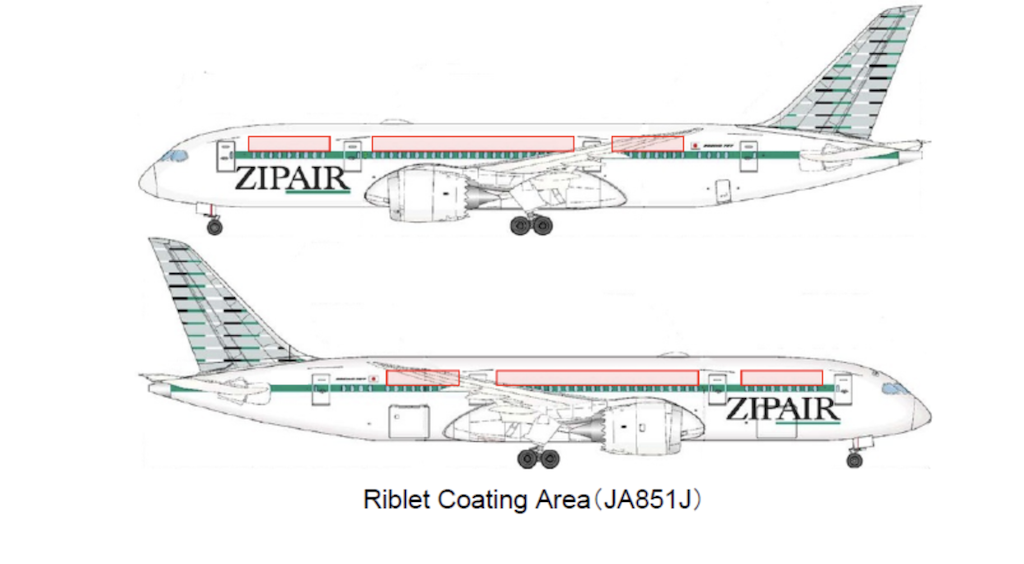
image: Japan Airlines Group
The application of the textured coating, inspired by the microstructure of shark skin, follows earlier trials on other aircraft within the Japan Airlines Group.
According to a joint press release from Japan Airlines, ZIPAIR Tokyo, the Japan Aerospace Exploration Agency and O-Well Corporation, the project is part of a broader effort to support aircraft decarbonisation by reducing drag during cruise, thereby improving fuel consumption and lowering CO₂ emissions.
The riblet coating is formed directly on the aircraft’s existing paint using a “paint-to-paint” method developed in collaboration with JAXA and O-Well. This process creates fine, groove-like structures aligned with the airflow that reduce skin friction drag without requiring additional film layers or major structural modifications.
JAXA estimates that over the course of a year of long-haul operations the coating is projected to save roughly 154t of jet fuel and about 492t of CO₂ emissions per aircraft per year compared with an untreated aircraft.
While percentage figures for drag reduction are modest, the aviation sector argues that even small improvements in aerodynamic efficiency can lead to substantial cumulative effects across a fleet and over multiple long-distance flights.
The ZIPAIR initiative builds on ongoing riblet research under JAXA’s Space Innovation through Partnership and Co-creation programme, which is also evaluating advanced riblet geometries that could deliver further drag-reduction performance. On-going testing will assess durability, aesthetics and fuel-saving efficacy in regular service as part of efforts to expand understanding of how these innovations perform in real-world operations.