

Bristol Airport funds three projects to investigate aviation emissions reductions
Bristol Airport has selected three projects to receive funding through its 2026 Aviation Carbon Transition (ACT) Programme, covering low-height wind power, direct air capture and hydrogen-electric aircraft operations.
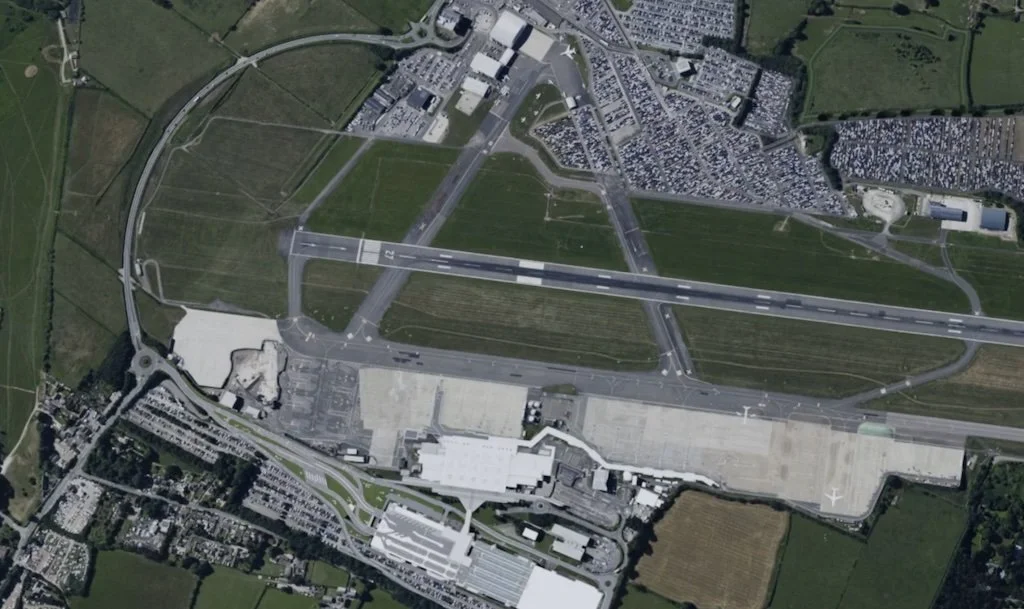
image: Bristol Airport
The projects were chosen from a record 28 applications to the airport's annual innovation programme, which is now in its fourth year. Bristol Airport has made £150,000 available through the 2026 fund, with most individual awards capped at £32,000.
The first project, Falcon: Airport Wind, is being led by Seamach. It will assess whether low-height wind turbines could be deployed at Bristol Airport, including the potential for combining wind generation with direct air capture. The study will consider issues associated with operating wind turbines in an airport environment, including radar interference and operational safety.
A second project, led by Equilibrion, will examine potential locations and technologies for incorporating carbon removal into the airport's longer-term decarbonisation plans. Bristol Airport said captured carbon could potentially be used in the production of sustainable aviation fuel.
The third project, Supercool: Hydrogen Turnaround and Cold Chain, is being developed by HyFlux. It will use a digital twin to model hydrogen-electric aircraft operations at the airport, including the production, liquefaction and transport of hydrogen within the region.
The ACT Programme primarily targets Scope 3 emissions associated with the airport including aircraft operations, passenger and staff travel, ground transport, construction and waste. It also accepts projects with potential Scope 1 and Scope 2 benefits, such as reductions in on-site fuel and electricity consumption.
Previous ACT-funded projects have included studies into hydrogen infrastructure and nuclear-derived sustainable aviation fuel, as well as trials of electric ground-handling equipment.
The airport is also participating in projects supported by the Department for Transport's Zero Emission Flight Demonstrator programme. The airport recently renewed its Level 4+ Airport Carbon Accreditation, with the accreditation recognising work to reduce emissions from its own operations and collaboration with organisations across its value chain.