

Teesside Airport to host feasibility study into autonomous freight vehicle operations
Teesside Airport is set to be part of a feasibility study examining the potential use of autonomous freight vehicles, as part of a wider UK Government-backed programme exploring connected and automated transport technologies.
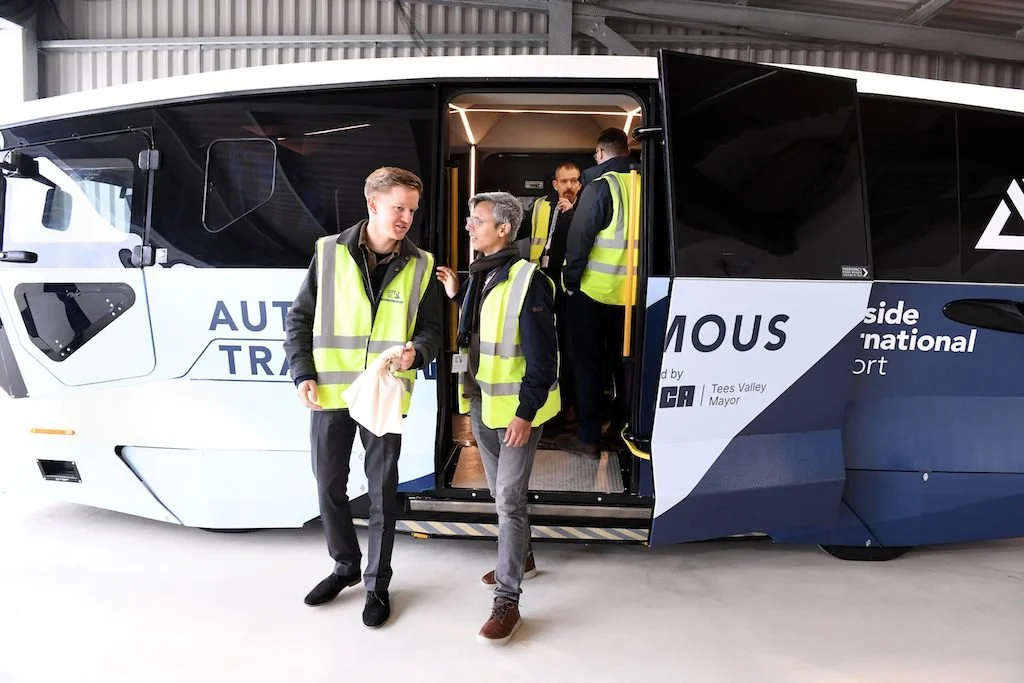
image: Teeside International Airport
The project, known as TACTIC (Teesside Autonomous Corridor for Trade Integration and Clearance), will investigate how driverless freight services could operate along a logistics corridor linking Teesport, Teesside International Airport and nearby industrial sites within the Teesside Freeport area.
The study is being led by the International Centre for Digital Trade and Innovation (iC4DTI), with support from transport research organisation Cenex, under the Government’s Connected and Automated Mobility (CAM) Pathfinder programme.
According to project details, the six-month study will assess whether autonomous freight vehicles could operate without an onboard safety driver in controlled environments, as well as how such services might be integrated into existing logistics and regulatory systems. It will also examine requirements for remote operations centres, insurance frameworks, and digital trade processes.
A key element of the research is the potential use of real-time vehicle data combined with digital documentation to streamline freight clearance processes. This approach is intended to allow compliance checks to be completed while vehicles are in transit, with the aim of reducing delays and improving reliability for time-sensitive cargo movements.
Teesside has been identified by project partners as a suitable test environment due to its combination of large, secure industrial sites, including the airport, Teesworks and Wilton International. These locations are expected to allow initial trials in controlled settings before any consideration of expansion to public road networks.
The feasibility study will also explore commercial viability, including potential operating models, costs and revenue streams, alongside opportunities for UK-based technology suppliers in areas such as sensors, connectivity and autonomous systems.
Funding for the work forms part of the UK Government’s Connected and Automated Mobility Pathfinder programme, which is delivered through the Department for Business and Trade in partnership with Innovate UK and Zenzic. The programme is intended to support the development of business cases for emerging transport technologies ahead of potential real-world deployment.
If successful, the study could inform future demonstrations of autonomous freight operations in the UK, particularly within designated industrial and logistics zones where controlled environments may allow for earlier adoption of driverless transport systems.