

WHILL launches autonomous mobility trial at Heathrow Terminal 3
Japanese/US autonomous mobility technology provider WHILL has launched a trial of its self-driving mobility service at Heathrow Airport’s Terminal 3, enabling passengers with mobility needs to use autonomous mobility devices to travel through the terminal independently.
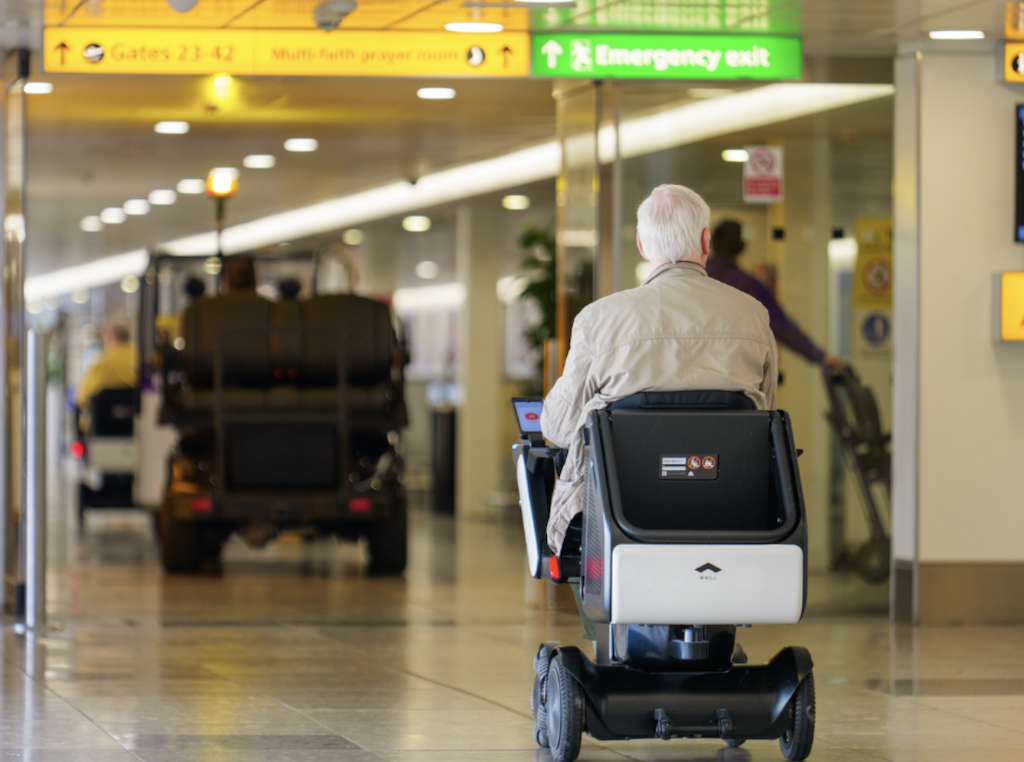
image: WHILL
The service uses self-driving mobility vehicles equipped with sensors and autonomous navigation technology. Users select a destination via a touchscreen interface, and the device transports them through the terminal before returning autonomously to a designated location once the journey is complete.
The trial, which is being carried out in partnership with ABM, a provider of assisted travel services, began just over a month ago.
According to WHILL, the Heathrow pilot adds to a network of airports and public facilities where its autonomous service is currently operating. The company said its technology is now available at 26 airports and facilities globally and has provided more than one million autonomous rides.
The trial comes as airports seek technologies aimed at improving accessibility and addressing growing passenger volumes. Airport operators and mobility service providers have increasingly examined automation as a way to enhance passenger support while improving operational efficiency.
WHILL said its system helps airports and passenger assistance providers manage wheelchair fleets more effectively. Potential operational benefits include reducing the need for manual wheelchair retrieval, improving fleet tracking, and allowing staff to focus on direct passenger assistance.
The autonomous mobility devices used in the Heathrow trial are equipped with 360-degree sensors, obstacle detection systems, and automated stopping capabilities intended to support navigation in busy public environments.
Matthias Pape, vice president of business development for WHILL Autonomous Service in Europe, the Middle East and Africa, said the Heathrow deployment represents a further step in the company's expansion of autonomous mobility services across international airports.