

Coventry to pilot planning for urban drone services under new Urban Ascent project
Coventry City Council has launched a new initiative — Urban Ascent — to explore how drones and eVTOL (electric vertical take-off and landing) aircraft could be integrated into city services and infrastructure.
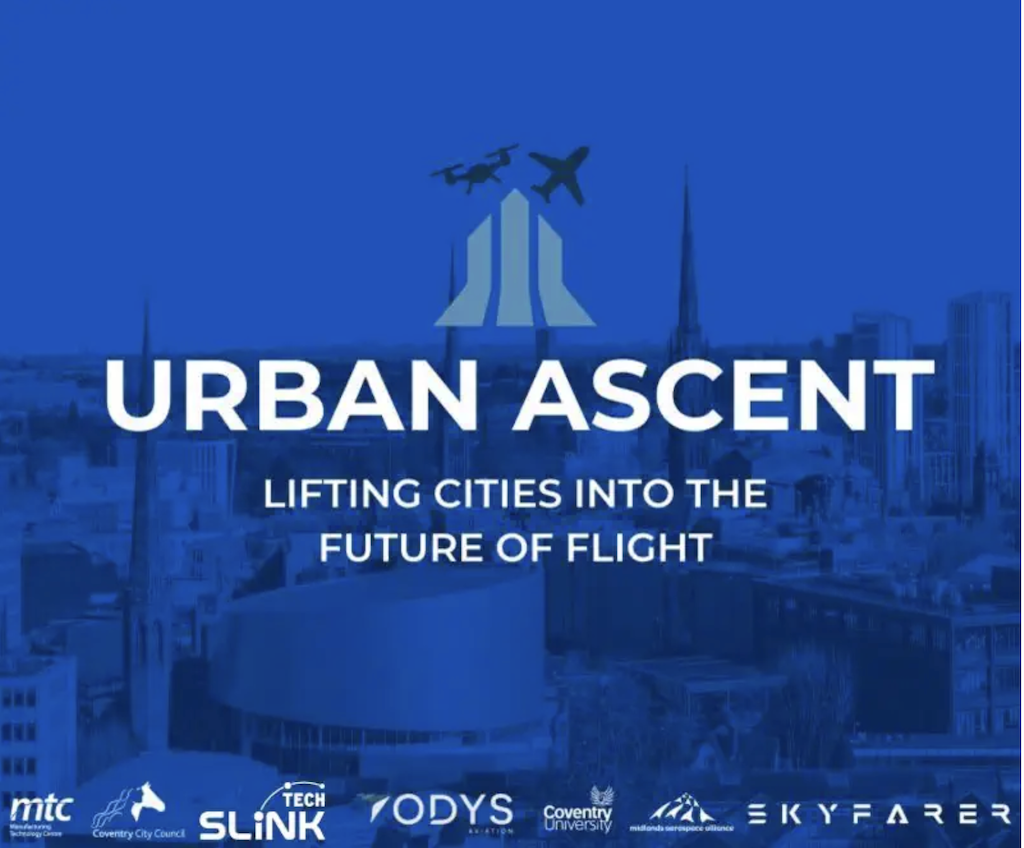
The project brings together a consortium of partners including Skyfarer, Coventry University, Manufacturing Technology Centre (MTC), SLiNK-TECH, and Odys Aviation, with support from the Midlands Aerospace Alliance. Funding is being provided by Innovate UK and the UK Department for Transport under the Future Flight Regional Demonstrator programme.
Rather than carrying out live drone flights immediately, Urban Ascent aims first to develop a city-scale “blueprint” that assesses regulatory, infrastructure and operational readiness. Key tasks include building a business case for urban air mobility and planning for necessary infrastructure, such as vertiports.
Potential applications under consideration include: accelerating medical logistics (transporting samples, medicines and supplies), supporting emergency response (e.g. delivering defibrillators or enabling aerial situational awareness), conducting automated inspections of roads, bridges and utilities, and — over the longer term — preparing the city for passenger eVTOL air-taxi services.
Councillor Jim O’Boyle cabinet member for jobs, regeneration and climate change said, “Coventry is already leading the way when it comes to drones and their future use in all sorts of areas. This project will see us take the next step in aligning technology with public needs. Here we are talking about things like drones being used to fly urgent medical supplies between hospitals, being used to inspect bridges and roads and even using them to enable an overview of things like road accidents and road congestion. We’re proud to help shape the next chapter of UK aviation from the heart of Coventry.”
Mariya Tarabanovska, Innovation Lead – Future Flight at Innovate UK said, “The Urban Ascent project is a strong example of how local authorities, industry, and academia can come together to prepare for the safe and scalable integration of new aviation services which benefit local communities and drive growth across the UK. We're proud to support this work through the Future Flight programme.”